

What quality food actually means today—and why it’s no longer what it used to be


When we say “quality food” today, most of us think of fresh fruits, vegetables, or products that look natural and healthy.
But the question arises—is what we eat today truly the same as it once was?
At first glance, the answer would be “yes.”
However, when we dig a little deeper, the picture becomes significantly different.
Food is no longer the same as before
A few decades ago, food grew in more natural conditions, more slowly and without such environmental burden. Today the situation is different.
The soil is often depleted, production methods are accelerated, and plants grow in conditions that are not always ideal. Although food still looks good, its nutritional composition is no longer what it used to be.
In other words—we eat, but we don’t always get what we think we’re consuming.
The impact of modern lifestyle
The quality of food today is affected not only by cultivation methods, but also by the environment in which we live.
Air, water, and soil pollution have become everyday reality.
All of this affects the plants we consume. They are part of that same system.
At the same time, our lifestyle has changed—more stress, less movement, faster eating habits, and greater exposure to toxins.
This means the body has greater needs today than before.
Greater needs, lower intake
Here we come to the key problem of modern humans.
On one side, we have increased burden on the body.
On the other side—reduced intake of quality nutrients.
This creates an imbalance.
The body then begins to function “at minimum capacity.” We may not immediately have serious symptoms, but signs such as fatigue, reduced concentration, or decreased immunity appear.
These are often the first signals that the body is lacking something.
Is today’s diet sufficient?
Under ideal conditions, a proper and varied diet should provide everything the body needs.
But reality is different.
Due to food quality, cultivation methods, and modern lifestyle, diet is often not sufficient to cover all the body’s needs.
And here we come to the question many are asking today: “Has supplementation become a necessity?”
The role of supplementation today
Supplementation should not replace diet. But it can provide support.
In modern conditions, it often represents a way to compensate for what we do not consume in sufficient amounts through daily food.
Particularly important are natural sources of nutrients that come in their original form, without aggressive processing.
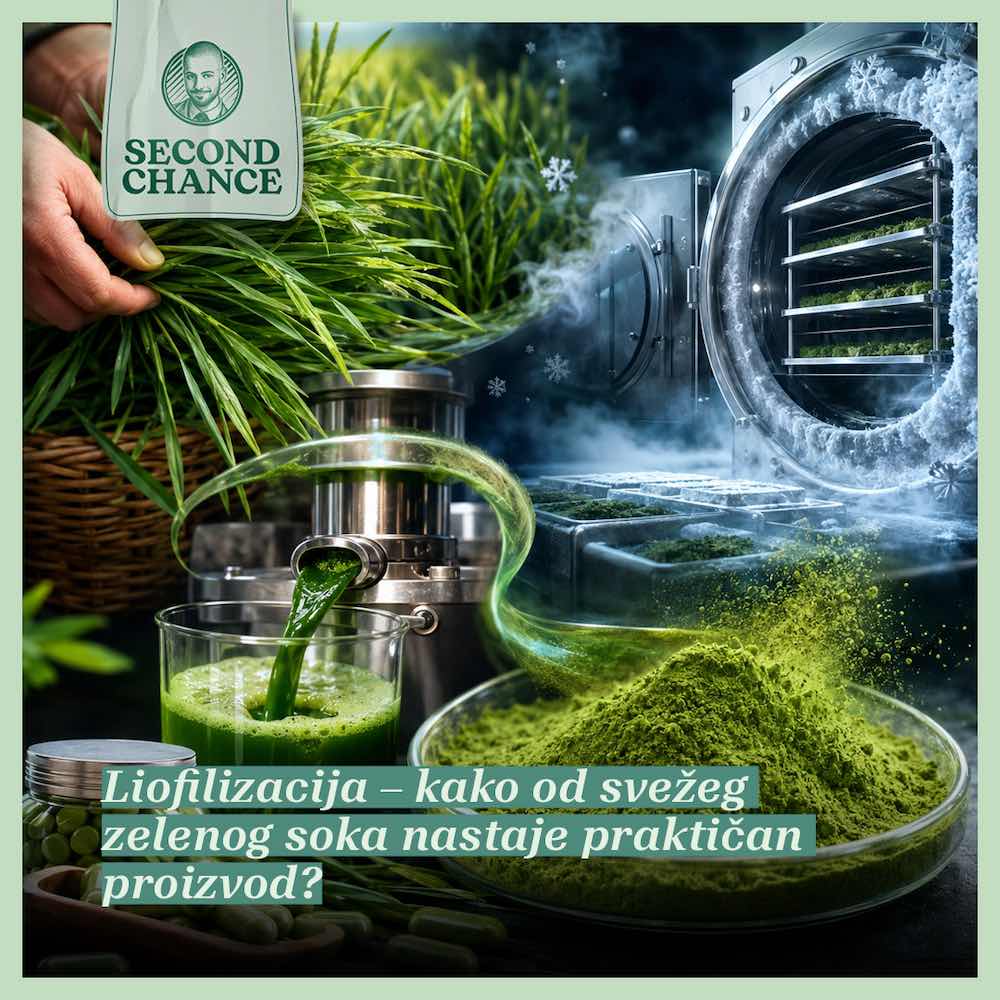
One such example is green spelt juice. It is obtained from the young leaves of the plant at the stage when it is nutritionally richest, and it contains chlorophyll, vitamins, minerals, and enzymes.
As such, it can help the body receive additional support—especially during periods of increased burden.
In a world where food quality has changed and the body’s needs have increased, it is important to think more broadly.
About diet. About lifestyle.
And about how to provide your body with what it truly lacks.
Because health is not only what we eat, but also what our body can actually utilize.