



Natural product or “natural marketing” — what is the difference?

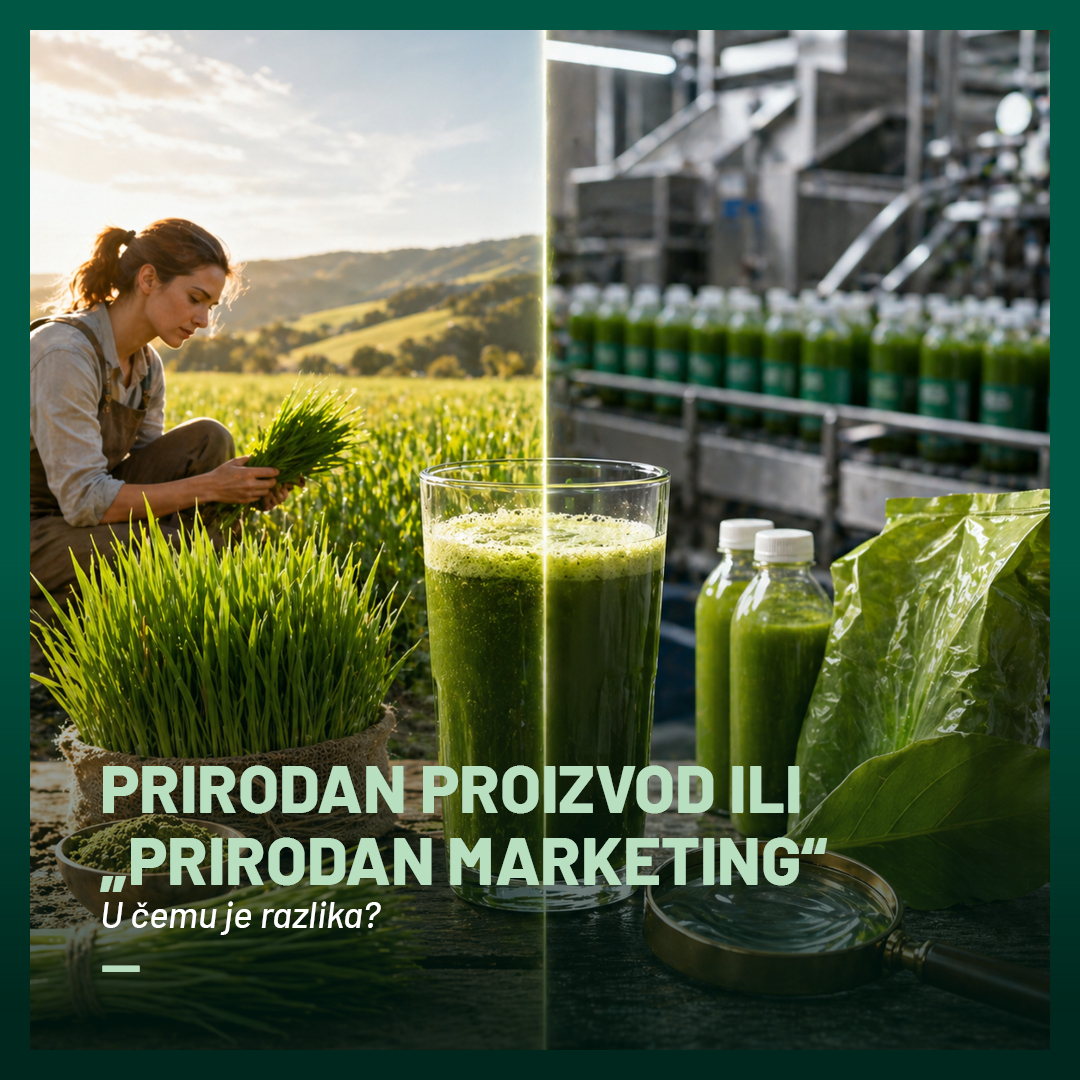
The word “natural” is everywhere today. On labels, in advertisements, and in product descriptions. It has become a synonym for something healthy and safe.
But what does that word actually mean?
Because there is a difference between a natural product and “natural marketing” — and that difference is often greater than we think.
When “natural” becomes just a message
Once, natural meant simply: without additives, from a known source, and minimally processed.
Today, it often means something else.
A product can look natural. It can have green packaging and names associated with health. But that says nothing about how it was actually created.
Natural is not what is written.
Natural is what stands behind the product.
Marketing and reality
Marketing creates the image. The process creates the quality.
The problem arises when the image becomes more important than the way the product is made.
Because true quality does not come from the packaging, but from the origin of the raw materials, the method of cultivation, and control during production.
These are things that are not visible at first glance, but they make the biggest difference.
Why this is important today
Today, “natural” is no longer a given.
Soil is often depleted, the environment polluted, and production accelerated. In such conditions, quality must be ensured — not assumed.
That is why there is more and more talk about production control.
Not as a limitation, but as a way to preserve what we call natural quality.
When the process makes the difference
One example of such an approach is green spelt juice.
Not because it is a “green product,” but because of the way it is created.
Within the production of Zeleni Sokovi Nemet, spelt is grown under controlled conditions, where every step of the process is monitored — from the raw material to the final product. After that, the young leaves are cold-pressed and immediately frozen to preserve their natural structure and composition.
In this case, “natural” is not just a description — it is the standard on which the entire process is based.
How to recognize the difference
Not through a slogan. Not through design.
But through questions.
Where do the raw materials come from?
How is it produced?
Is there process control?
These are questions we rarely ask, but they are exactly what reveal the essence of quality.
Perhaps the most important question today is not what we buy.
Perhaps it is more important how well we understand what we choose.
Because the difference between a natural product and “natural marketing” is not in the words. It is in the process.
And when we start looking at the process — the choice becomes clearer.