


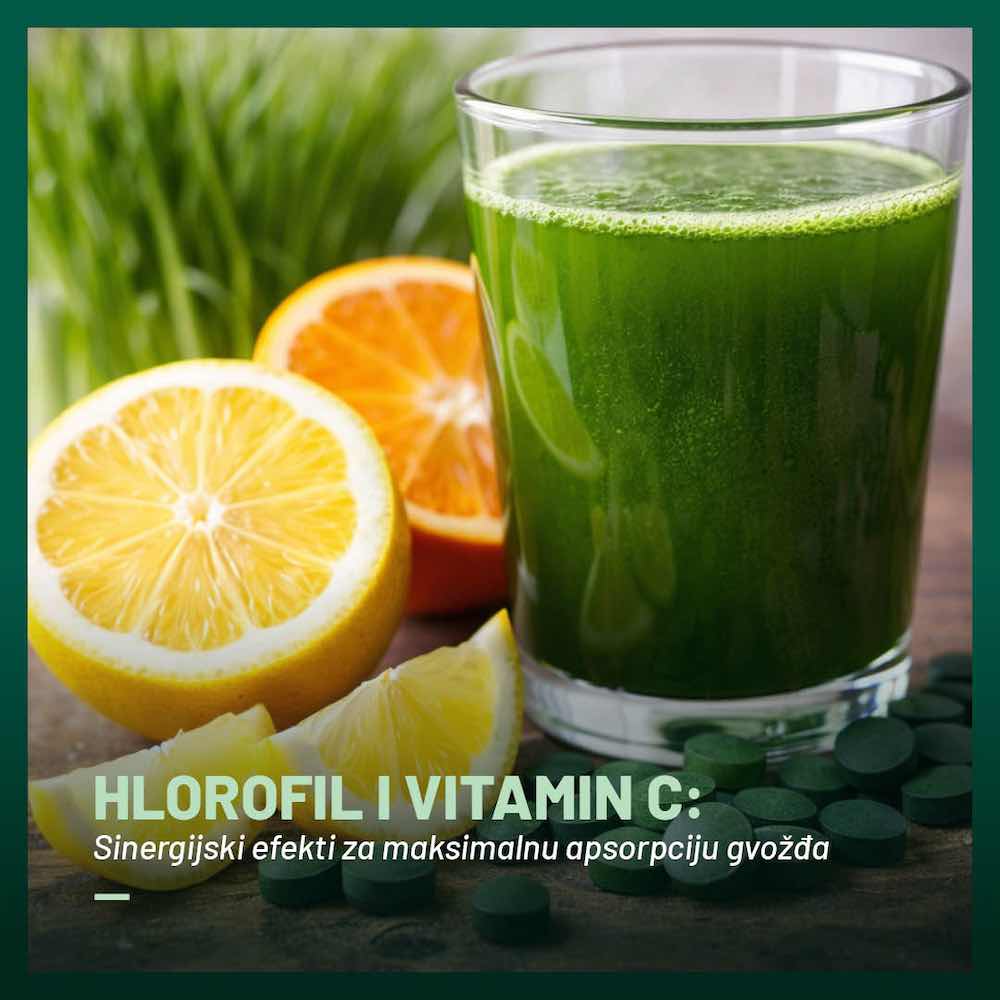
Chlorophyll and Vitamin C: Synergistic effects for maximum iron absorption

Iron absorption is one of the most sensitive processes in nutrition. It often happens that people consume enough iron, but their blood count remains the same and they feel tired, exhausted, and without concentration. The reason is simple: the body does not absorb iron easily, especially that of plant origin.
That is why there is increasing talk about the combination of chlorophyll and vitamin C. Together they create a powerful synergistic effect that allows the body to utilize much more iron than when they are ingested separately.
Why is it difficult for the body to absorb iron?
Plant-based iron (non-heme) is naturally less easily absorbed from the digestive system. To be utilized, the body has to perform several chemical transformations, and this process is often hampered by factors such as stress, a poor microbiome, phytates from cereals and vegetables, or the presence of calcium in the meal.
Therefore, iron intake does not guarantee its availability in the blood — absorption is key.
Chlorophyll: preparing the ground for absorption
Chlorophyll, the pigment that gives plants their green color, is extremely similar to hemoglobin. Because of this similarity, it:
- supports tissue oxygenation,
- contributes to healthy blood,
- affects the pH balance in the intestines,
- reduces the effect of anti-nutrients that block iron absorption.
In other words, chlorophyll creates an “ideal environment” in which the body can more easily absorb minerals.
Vitamin C: an activator that starts the process
Unlike chlorophyll, vitamin C acts as a direct activator. Its role is very specific: it converts iron into a form that is more readily available to the body. In addition, it protects it from oxidation and increases its solubility in the intestines.
That is why vitamin C is often recommended with plant-based iron.
What does the synergistic effect of these two nutrients look like?
When chlorophyll and vitamin C are combined, something more than simply adding their effects occurs. They act simultaneously on different phases of absorption:
- Vitamin C activates iron, converting it into a form that the body can use immediately.
- Chlorophyll improves conditions in the digestive system, so absorption proceeds more efficiently.
- The effect of absorption blockers is reduced such as phytates and oxalates.
- The creation of higher quality red blood cells is supported, which affects energy and concentration.
The result is much stronger iron absorption than when either nutrient is used alone.
Who is this combination especially useful for?
People who notice the difference most quickly are usually those who already have a problem with absorption. These are:
- people with anemia or low ferritin,
- women with heavy menstruation,
- athletes and recreational athletes,
- vegans and vegetarians,
- people with digestive problems or low stomach acid.
In their case, it is often visible that the combination of chlorophyll and vitamin C gives better results than increasing the dose of iron itself.
How to properly use chlorophyll and vitamin C for the best effect?
It is best to take them before meals or on an empty stomach, as absorption is highest then.
In practice, the most common uses are:
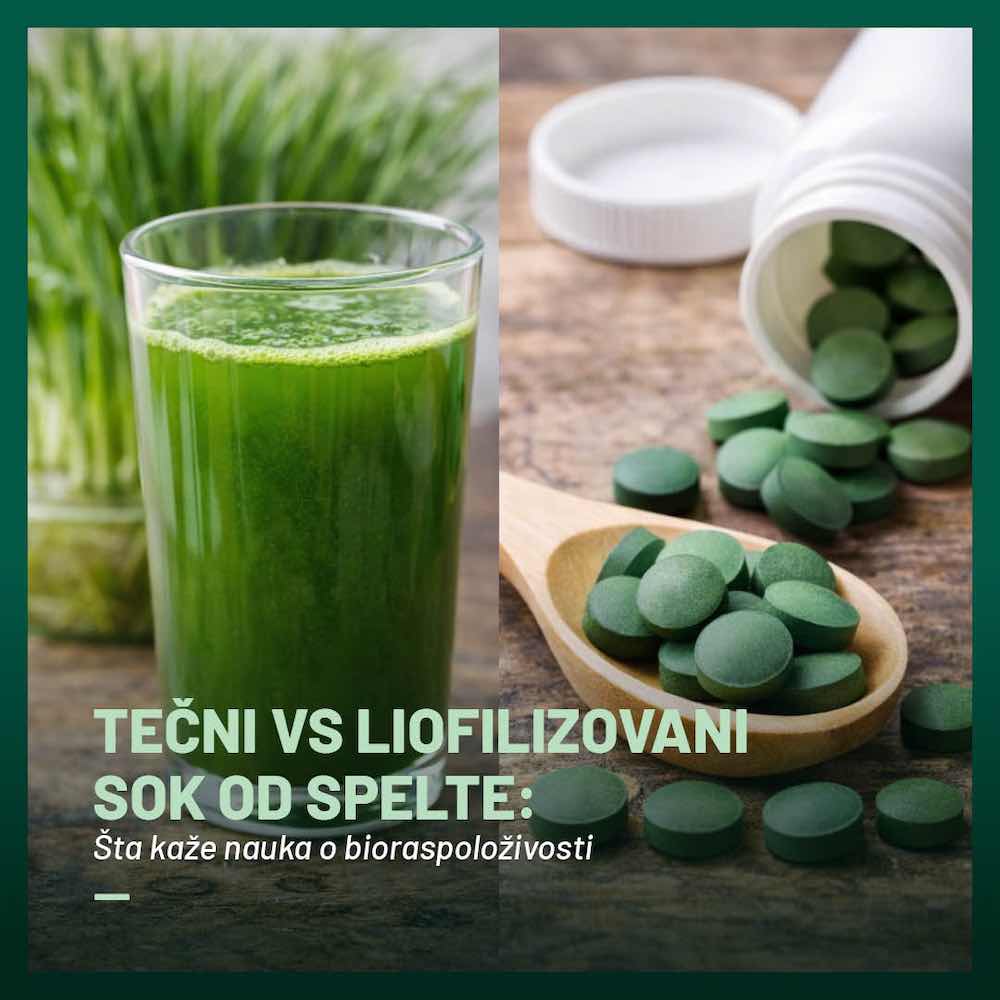
- spelled juice, which is rich in chlorophyll,
- a natural source of vitamin C (lemon, acerola, aronia).
It is important to avoid coffee, dairy products, and calcium in the same period, as they can reduce iron absorption by up to 50%.
Chlorophyll and vitamin C together make one of the most powerful natural mechanisms for increasing iron absorption. While vitamin C activates iron, chlorophyll prepares the ground for its passage and use in the blood. That is why this combination is increasingly becoming part of advanced protocols for energy, focus, and healthy blood counts.