


Spelt Grass Juice or Spirulina?

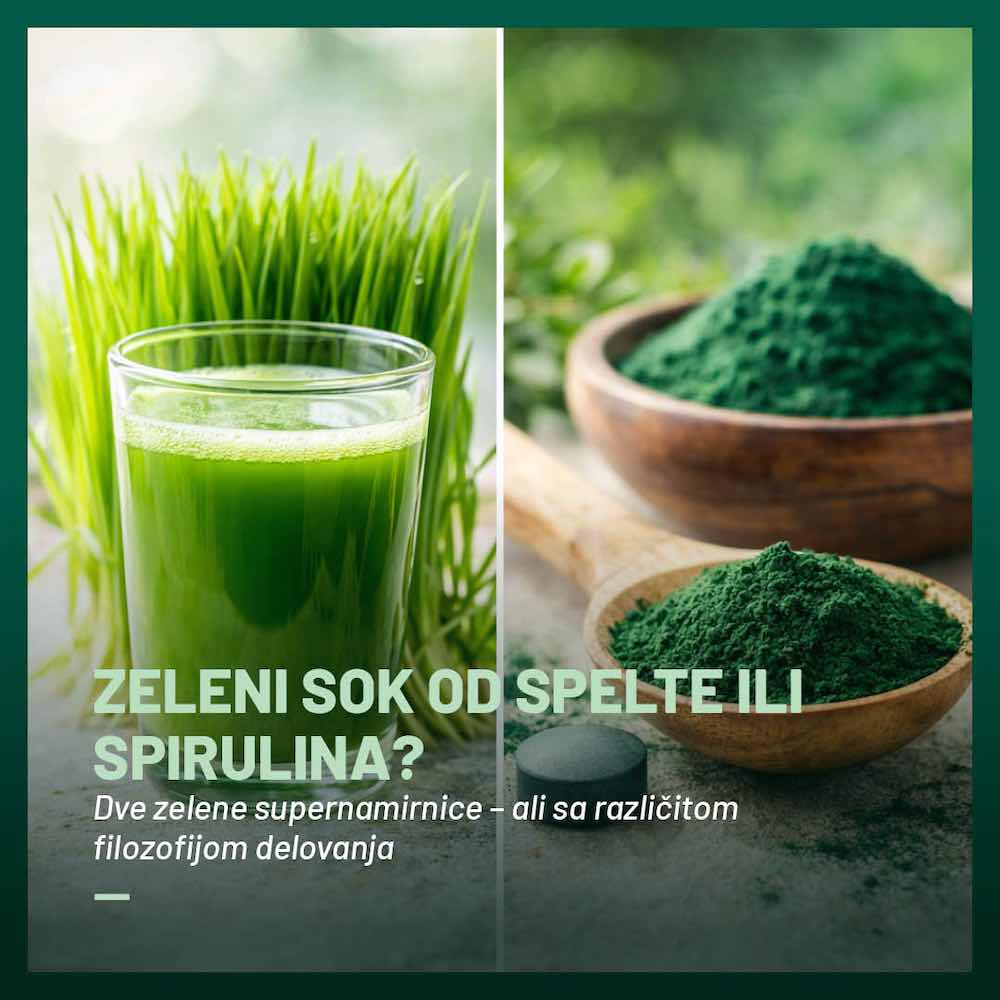
Two Green Superfoods – But with Different Philosophies of Action
In the world of natural supplementation, the color green has almost become a symbol of vitality. Two products stand out in particular – spirulina and spelt grass juice. Although they are often grouped into the same “superfood” category, their origin, composition, and mode of action on the body differ significantly.
Understanding these differences can help us make a choice that is aligned with our body’s needs.
Spirulina – Concentrated Power of a Microorganism
Spirulina is a cyanobacterium, often called blue-green algae. Its nutritional value is impressive: it contains between 60 and 70% protein, including all essential amino acids. It is rich in iron, B vitamins, and the antioxidant phycocyanin.
Scientific studies show that spirulina may contribute to:
- reduction of oxidative stress
- regulation of blood lipid levels
- support of the immune system
Due to its high protein concentration, it is often the choice of athletes or individuals with increased nutritional needs. However, this very concentration can also be a challenge – its intense taste and specific odor do not appeal to everyone, and in sensitive individuals it may cause stomach discomfort.
Spelt Grass Juice – The Power of Young Plant Growth
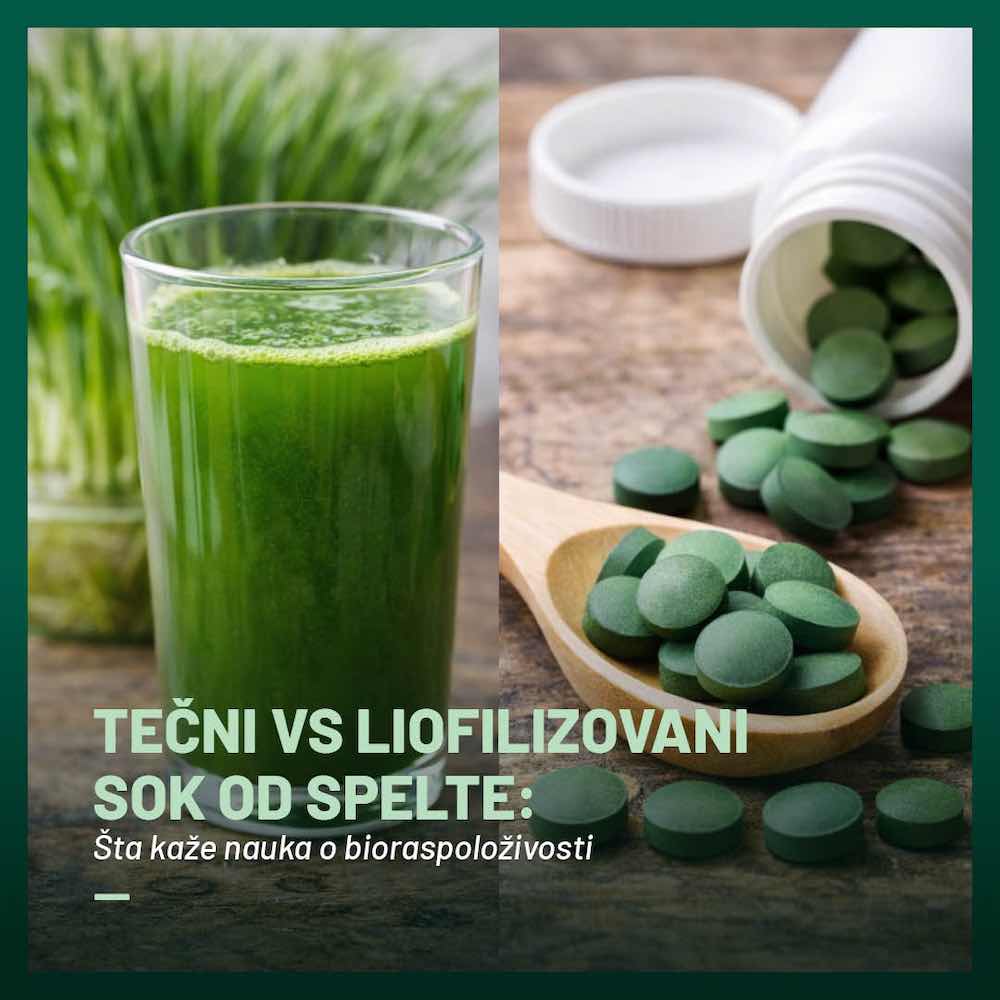
Spelt grass juice is obtained by pressing the young leaves of the plant before grain formation. At this stage, the plant is in a period of most intensive growth, when it is rich in chlorophyll, enzymes, vitamins, and antioxidants.
Its composition is exceptionally complex and nutritionally rich. It is characterized by:
- approximately 90 minerals and trace elements (K, Ca, Na, Mg, Cu, Se, Fe, and others)
- essential amino acids important for regeneration and vitality
- vitamins A, C, E, K, and B-complex vitamins
- high chlorophyll content with antioxidant action
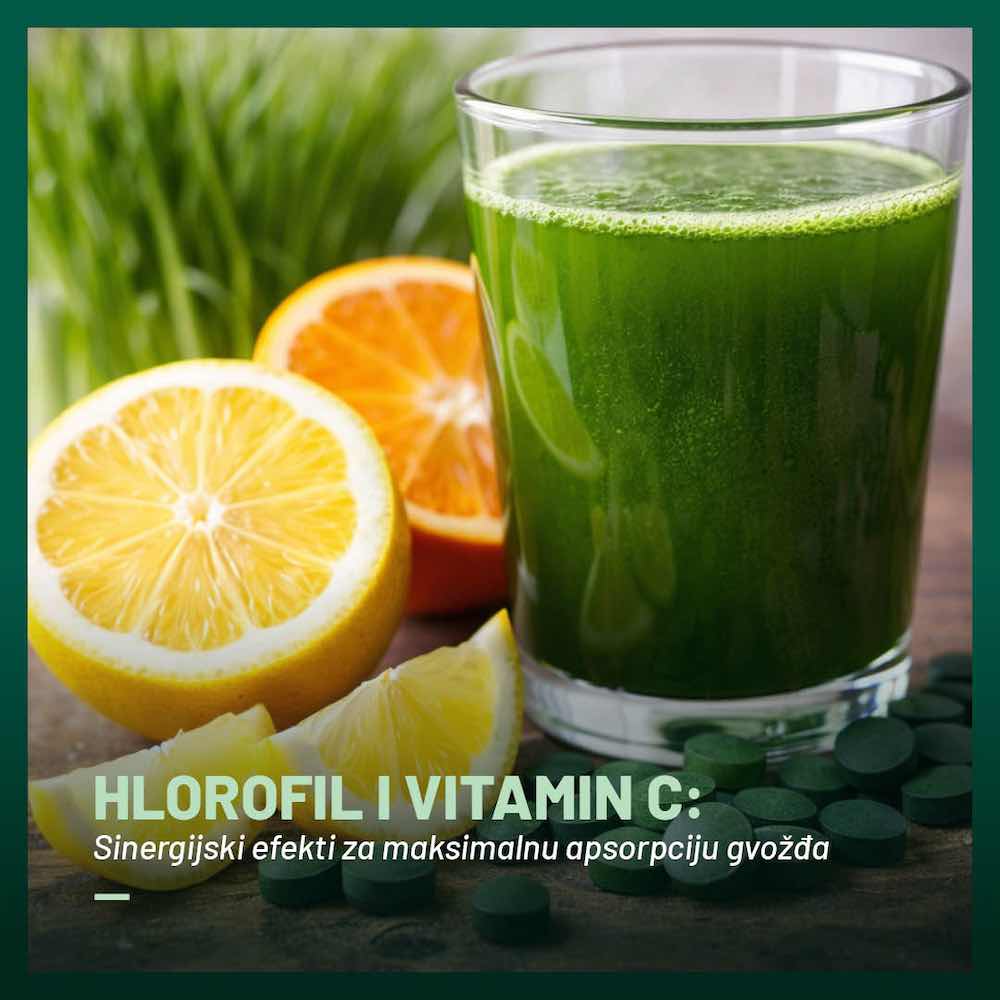
Chlorophyll, due to its similarity to hemoglobin, is associated in studies with antioxidant action and support of natural detoxification processes. Research on young cereal grasses has shown potential benefits for fatigue, body recovery, and blood count support, precisely due to the combination of micronutrients that work synergistically.
Unlike spirulina, which is focused on high intake of individual nutrients, spelt grass juice works more broadly and in a more balanced manner. Its effect is often described as gradual strengthening of the body, without sudden energy spikes or digestive system burden.
Difference in Approach to the Body
Spirulina is nutritionally very concentrated – it is a “hit” of nutrients in a small amount. Spelt grass juice, on the other hand, is closer to the concept of functional food. It does not act only through one dominant nutrient, but through a natural combination of vitamins, minerals, enzymes, and plant compounds.
Many users of spelt grass juice report:
- more stable energy levels
- easier digestion
- reduced feeling of bloating
- general feeling of body “cleanliness”
Although these experiences are individual, the scientific basis lies in the fact that plant enzymes and antioxidants can contribute to reducing oxidative burden and supporting digestive processes.
Another important advantage is tolerability. Spelt grass juice has a milder taste and usually fits more easily into daily routine, which is crucial when we talk about long-term use.
Which Is the Better Choice?
If the focus is on high protein intake in a small amount, spirulina has its advantages. However, when seeking natural, plant-oriented, and long-term support for the body, spelt grass juice works in a more balanced and comprehensive manner.
Its strength is not in the concentration of one nutrient, but in the harmony of ingredients that support the body without burden – which often makes it more suitable for daily use.