



The body is not made for sitting: why movement is more important than we think

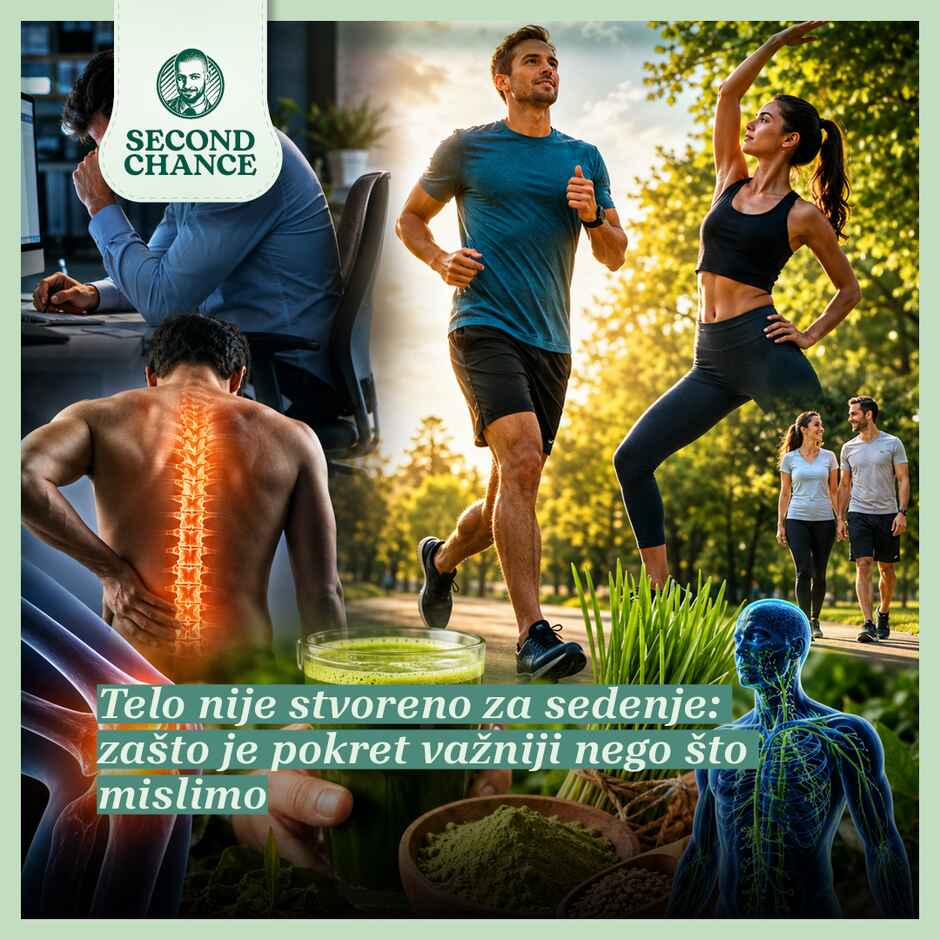
Modern humans have never had more technology and less movement. We spend most of the day sitting — in the car, in the office, on the phone, in front of the TV or computer. The problem is that our body, regardless of the modern lifestyle, still functions according to rules that are thousands of years old.
The human body is not designed for prolonged sitting. On the contrary — the body is biologically designed for movement. Muscles, joints, circulation, the lymphatic system, and even the brain function best when we are active.
Interestingly, research shows that prolonged sitting can have a negative impact on the body even in people who exercise regularly. In other words, a single daily workout cannot completely “cancel out” ten hours spent in a chair.
What actually happens to the body when we sit for a long time?
After just one hour of uninterrupted sitting, circulation slows down and the flow of oxygen through the body decreases. Muscles become passive, metabolism slows down, and the body enters a state of reduced activity.
But what many do not know is that movement also has a direct impact on:
- hormonal function,
- energy levels,
- lymphatic drainage,
- joint health,
- brain function and concentration,
- sleep quality.
It is particularly interesting that the lymphatic system, unlike the bloodstream, does not have a “pump” like the heart. Lymph moves precisely thanks to body movement and muscle work. When we move too little, the elimination of certain waste products from the body also slows down.
Because of this, people who sit a lot often experience not only back pain or a stiff neck, but also:
- lack of energy,
- heavy legs,
- bloating,
- a feeling of fatigue without a clear reason,
- poorer concentration.
Movement is not just about weight
One of the biggest misconceptions today is that physical activity is important only for appearance or weight loss. In reality, movement affects almost every system in the body.
When we walk, stretch, or engage our muscles, the body receives a signal that it needs to “maintain the system.” Circulation improves, cells receive more oxygen, and joints are naturally lubricated by movement.
It is interesting that cartilage in the joints does not have a direct blood supply like most tissues. It receives nutrients precisely through movement and pressure during motion. That is why prolonged sitting can contribute to a feeling of stiffness and strain in the joints.
This is precisely why many people who feel they have “heavy” or strained joints look for natural ways to support their body. In addition to proper movement and hydration, attention is increasingly directed towards nutrient-rich plants.
Barley juice is one of the natural products that many include in their daily routine precisely because of its richness in chlorophyll, minerals, and antioxidants. People often use it as part of bodily support against fatigue and strain, and as natural support for joint health and mobility after prolonged sitting or a lack of physical activity.
The body loves small but frequent movements
The good news is that the body does not need extreme workouts to feel the benefits of movement. Consistency is much more important.
Sometimes it is the small changes that make the biggest difference:
- a short walk after a meal,
- standing up every hour,
- stretching during work,
- using the stairs instead of the elevator,
- light physical activity in the fresh air.
Our body responds to movement much faster than we think. Even a few days of regular movement can contribute to better energy, improved sleep quality, and better concentration.
Movement is a necessity, not a luxury
In a world where we spend most of the day sitting, movement has become something we “must fit” into our schedule. However, the truth is quite the opposite — sitting is what is unnatural for the body.
The body is not made for hours spent without movement. It is made to walk, to stretch, to be active. Therefore, physical activity is not just a matter of fitness or appearance, but a fundamental need of the body for normal functioning.
When we give the body more movement, it gives back very quickly through more energy, better mobility, and a feeling of vitality that no chair can provide.