



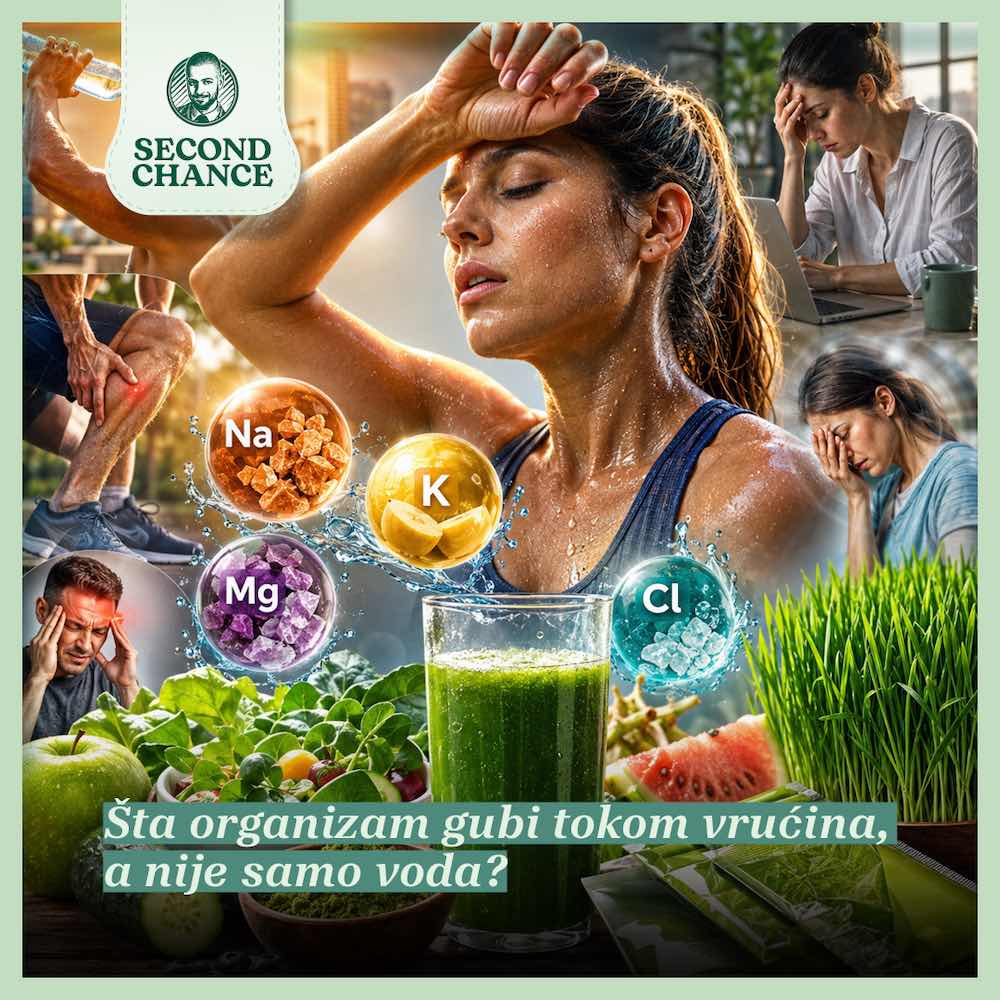
What does the body lose during hot weather besides just water?

When temperatures rise, most people automatically think of hydration. We hear advice to drink more water, carry a bottle with us, and avoid the sun during the hottest part of the day. While this advice is important, there is one detail that is much less talked about – during hot weather, the body does not just lose water.
In fact, high temperatures affect a whole range of processes in the body. Through sweating, we do not just lose fluid, but also precious minerals, and changes in appetite, energy levels, and concentration are often linked precisely to these hidden losses.
Why do we feel tired in summer even though we rest more?
Many people notice that during the summer they have less energy, find it harder to concentrate, or feel unexplained exhaustion. At first glance, this seems illogical – the days are longer, we often have more free time, and some are even on vacation.
However, during hot weather, the body invests extra energy to maintain a stable body temperature. Cooling the body through sweating requires certain resources, and along with that comes an increased loss of important minerals.
Minerals we often forget
When we sweat, we do not just lose water. We also lose electrolytes, which are minerals that participate in numerous bodily functions.
Among the most important are:
- Sodium
- Potassium
- Magnesium
- Chlorides
These minerals play an important role in muscle function, the nervous system, and maintaining fluid balance in the body.
Their deficiency can contribute to the occurrence of:
- Fatigue
- Muscle cramps
- Headaches
- Dizziness
- Reduced concentration
Because of this, it can sometimes happen that a person consumes enough water but still does not feel their best.
The summer paradox: we eat less, but the body needs more
During warm days, appetite is often lower. This is a completely natural reaction of the body.
The problem arises when reduced food intake lasts for a long time. Then the body does not just receive fewer calories, but also fewer vitamins, minerals, and other nutrients it needs for normal functioning.
Many people unconsciously skip meals during the summer and rely on coffee, carbonated drinks, or quick snacks. Such a diet can further contribute to a feeling of exhaustion.
What happens to concentration?
One of the lesser-known effects of high temperatures is their impact on mental performance.
Research shows that heat can affect:
- Decision-making speed
- Attention
- Productivity
- Memory
Therefore, it is not unusual to feel that we think more slowly during summer days or that we need more time to complete daily tasks.
The body simply redirects part of its resources to maintaining internal balance.
How to support the body during summer?
In addition to sufficient water intake, it is important to pay attention to the quality of the diet.
Foods rich in the following are particularly useful:
- Chlorophyll
- Vitamins
- Minerals
- Antioxidants
This is precisely why many people choose green plant foods during the summer as additional support for their daily diet.
One practical way to consume nutrients can be green spelt juice. Spelt is used in the young green leaf stage, when it naturally contains numerous vitamins, minerals, chlorophyll, and other plant ingredients that are often the focus of modern nutritional research.
Small habits that can make a big difference
During summer, it is not necessary to make big changes to support the body.
Often, it is enough to:
- Drink water evenly throughout the day
- Not wait until strong thirst appears
- Consume more fresh fruits and vegetables
- Pay attention to mineral intake
- Not skip meals
- Ensure enough sleep
These simple habits can help the body adapt more easily to high temperatures.
When we talk about summer heat, water is important, but it is not the whole story. During hot days, the body loses much more than just fluid. Minerals, energy, concentration, and nutritional reserves can also be under pressure.
Therefore, it is important to view hydration as part of a broader picture. True support for the body during summer involves a combination of sufficient fluid intake, a quality diet, and daily habits that help the body maintain balance even when temperatures reach their peak.